
FEDERAL CONSULTATION ON ADDRESSING ADMINISTRATIVE CHALLENGES TO EFFECTIVE HUMAN RIGHTS DUE DILIGENCE (HRDD) IN PAKISTAN
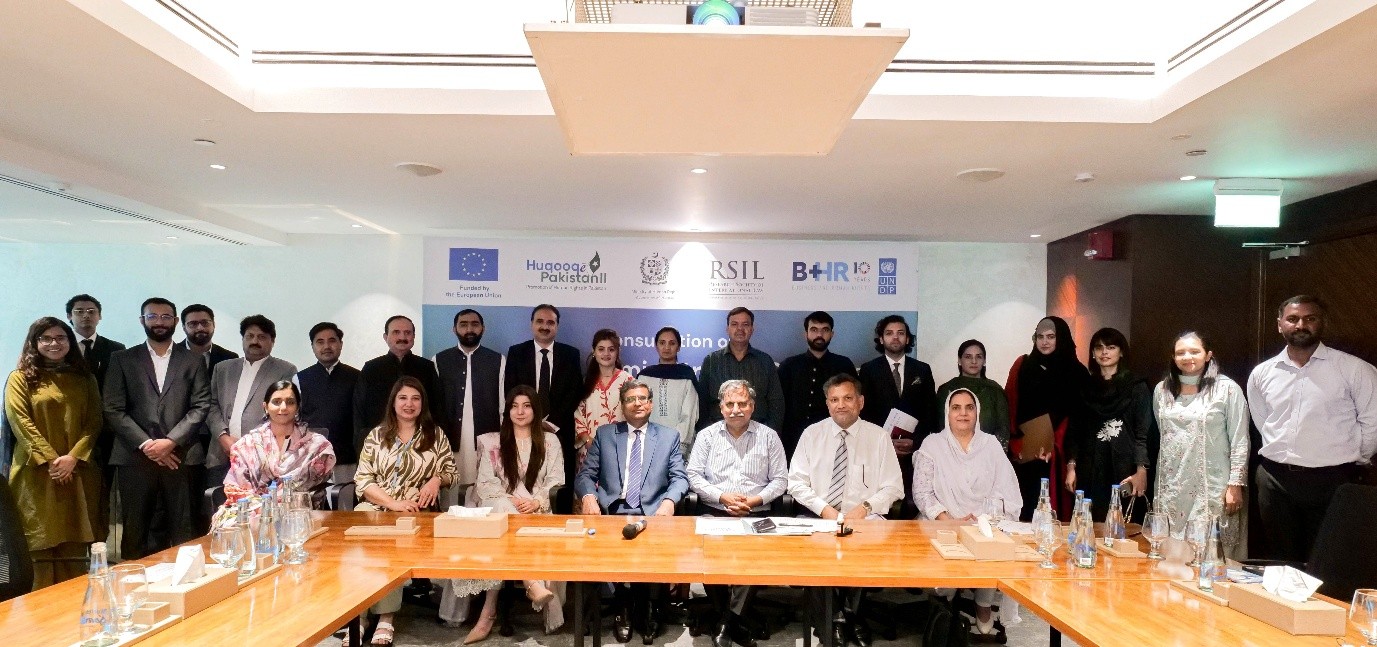
The Ministry of Human Rights, in collaboration with the United Nations Development Programme (UNDP), convened a high-level consultation “Addressing Administrative Challenges to Effective Human Rights Due Diligence (HRDD) in Pakistan” at the Movenpick Hotel, Islamabad. This consultation was conducted in the wake of findings and recommendations of a feasibility study being conducted under National Action Plan on Business and Human Rights on introducing a mandatory Human Rights Due Diligence Framework in Pakistan. The consultation brought together key government stakeholders, to strengthen the implementation of Pakistan’s National Action Plan on Business and Human Rights (NAP-BHR) and advancing a feasible Human Rights Due Diligence (HRDD) framework. The session commenced with welcome remarks by Mr. Shahzad Ahmad Khan, Director (HR), who provided a comprehensive introduction and overview of the NAP-BHR. He emphasized Pakistan’s commitment to aligning business practices with the UN Guiding Principles on Business and Human Rights (UNGPs) and highlighted the importance of HRDD as a critical tool to promote responsible business conduct and mitigate human rights risks across supply chains. Afterwards, Mr. Kamran Rajar, National Technical Specialist, UNDP gave his remarks highlighting UNDP’s global work on Business and Human Rights and assisting countries in developing and implementing their National Action Plans on Business and Human Rights. Deputy Director, Ms. Khaola Batool, presented key implementation progress under various priority areas of the NAP-BHR. She highlighted significant legislative and policy developments, including the Punjab Labour Code 2026, The Sindh Women Agricultural Workers Rules, 2026, noting their contribution toward strengthening labor rights, promoting gender inclusion, and enhancing accountability mechanisms. She also underscored the importance of integrating human rights due diligence into governance and regulatory frameworks. This was followed by presentation by Mr. Raas Nabeel, the lead researcher on the feasibility study. The pparticipants also engaged in detailed discussions on key policy questions, including the integration of HRDD into public procurement systems, export financing frameworks, and certification mechanisms. The dialogue emphasized the importance of adopting an incentive-based approach to encourage voluntary compliance while minimizing administrative burdens. The consultation provided a platform for valuable insights and feedback from stakeholders, focusing on addressing administrative challenges, strengthening governance structures, and enhancing the feasibility of HRDD implementation. Participants also stressed the importance of capacity-building, awareness-raising, and creating enabling regulatory environments to support businesses in adopting human rights due diligence practices. In his closing remarks, Mr. Muhammad Arshad, Director General, Ministry of Human Rights, appreciated the active participation of stakeholders and reaffirmed the government’s commitment to strengthening the NAP-BHR framework. He also outlined key considerations for the next phase of NAP-BHR. The consultation concluded with a shared commitment among stakeholders to continue collaborative efforts in advancing responsible business conduct, improving human rights protections, and ensuring effective implementation of the NAP-BHR across Pakistan.