
Consultation on Implementation of the National Action Plan on Business and Human Rights (2021–2026) Islamabad, 18 June 2025
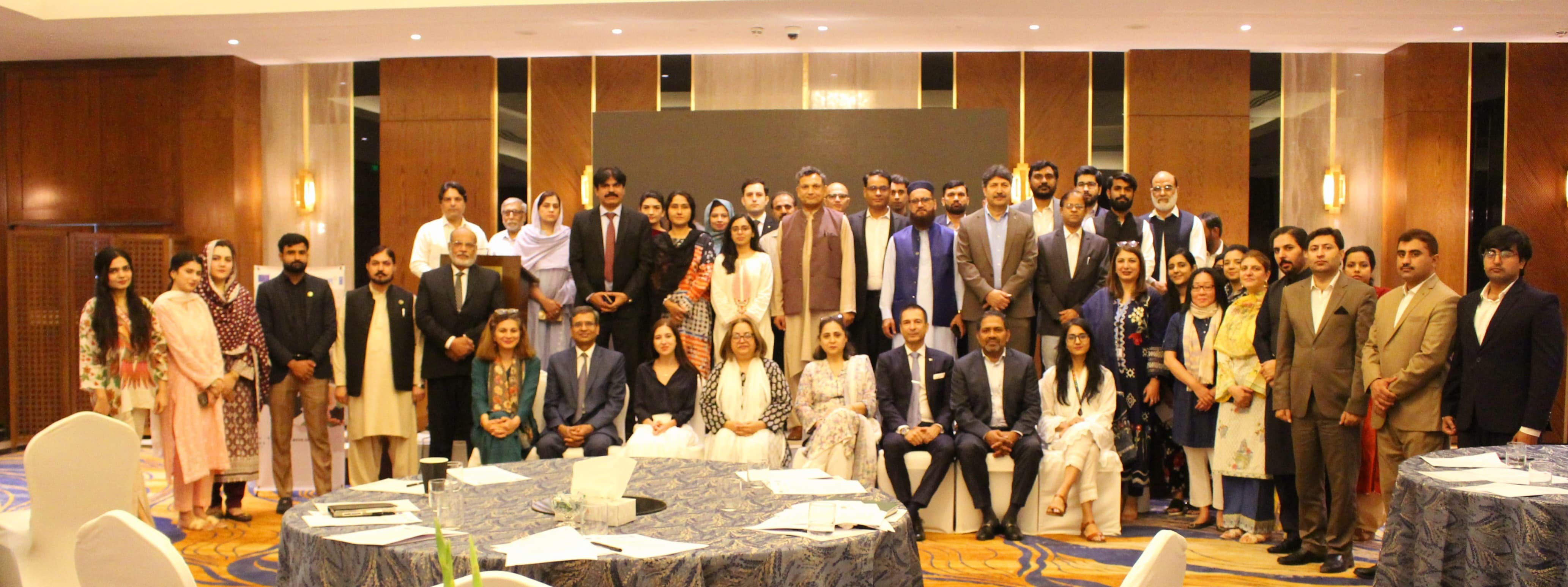
Consultation on Implementation of the National Action Plan on Business and Human Rights (2021–2026) The Ministry of Human Rights (MoHR), in collaboration with the United Nations Development Programme (UNDP) Pakistan, convened a one-day national consultation on the implementation of the National Action Plan on Business and Human Rights (NAP-BHR) 2021–2026 on 18 June 2025 at Marriott Hotel, Islamabad. The consultation brought together federal stakeholders, private sector representatives, and civil society organizations. The Secretary, MoHR, welcomed participants and highlighted the significance of the NAP-BHR as a guiding document for aligning business practices with human rights standards. She encouraged open and meaningful engagement and expressed gratitude for the cross-sectoral participation. Ms. Marta, representing the European Union Delegation to Pakistan, underscored the global relevance of business and human rights and reaffirmed the EU’s support in advancing the NAP-BHR through partnerships. Ms. Khaola Batool from MoHR provided a background on the development and progress of the NAP-BHR and outlined Pakistan’s approach to Human Rights Due Diligence (HRDD). Ms. Maimana Khattak presented a legal gap analysis of the Companies Act 2017 and the Public Procurement Regulatory Authority (PPRA) Rules 2014 with respect to HRDD, and proposed amendments to better align them with international human rights standards. The proposals were met with active engagement and constructive feedback from participants. A key point of discussion during the workshop was the need for businesses not only to assess and identify their direct human rights impacts, but also to account for indirect impacts across their entire supply chains. The importance of embedding HRDD throughout procurement, outsourcing, and third-party relationships was repeatedly emphasized by stakeholders as essential to responsible business conduct. Ms. Khalida Habib from the Securities and Exchange Commission of Pakistan (SECP) gave a detailed presentation on SECP’s institutional mandate, its ongoing efforts in promoting business and human rights since 2004–2005, and its priorities moving forward. She reaffirmed SECP’s commitment to working with MoHR on developing a regulatory HRDD framework. From the private sector, Eng. Faheem Iqbal Chaudhary Chairman of the Pakistan Overseas Employement Promoters Association raised the importance of considering the recruitment sector in any revisions to the legal framework. Mr. Daniel Arsenault, Political, Economic and Cultural Counsellor at the Canadian High Commission, shared Canada’s experiences and emphasized the global nature of HRDD. He also highlighted the normative shifts needed by both governments and businesses to be competitive in global markets and the practical benefits businesses gain from implementing HRDD. The consultation concluded with Director General (Human Rights), Mr. Muhammad Arshad, thanking all participants for their valuable input. He reiterated the importance of implementing HRDD in both policy and practice and particularly stressed the need for robust enforcement of labour laws as part of Pakistan’s commitment to responsible and rights-based business practices.
Islamabad, 18 June 2025