
FEDERAL CAPACITY BUILDING TRAINING ON UNDERSTANDING NATIONAL AND INTERNATIONAL HUMAN RIGHTS FRAMEWORKS IN PAKISTAN
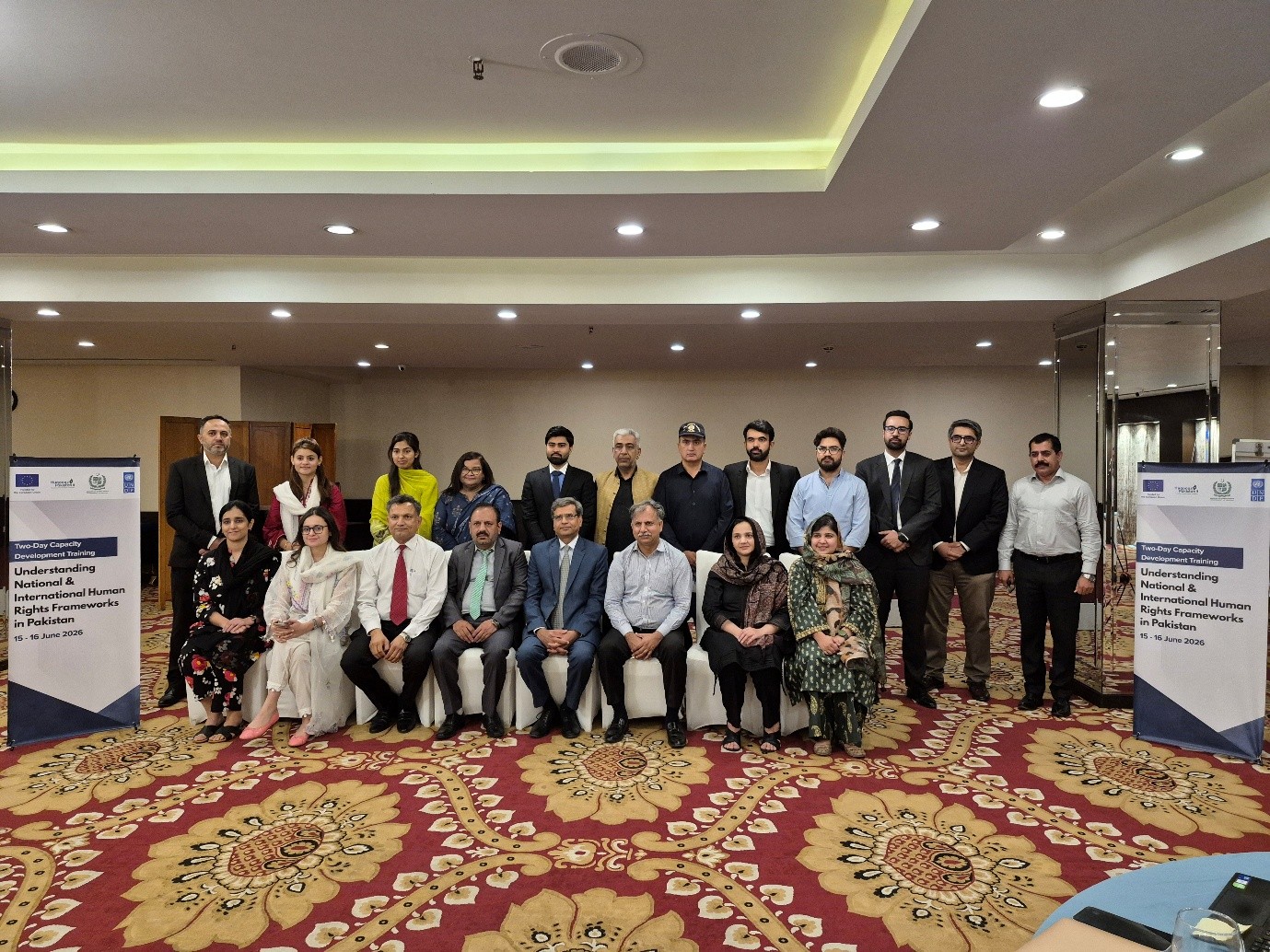
Islamabad,15th-16th June 2026 – The Ministry of Human Rights, in collaboration with the United Nations Development Programme (UNDP) under the Huqooq-e-Pakistan II Project, organized a two-day Federal Capacity Building Training on “Understanding National and International Human Rights Frameworks in Pakistan” at Ramada Hotel, Islamabad. The training brought together representatives from Federal Ministries, National Human Rights Institutions (NHRIs), and statutory bodies to strengthen institutional understanding of Pakistan’s human rights obligations, reporting mechanisms, and coordination frameworks. The initiative aimed to enhance the capacity of federal stakeholders to effectively contribute to treaty body reporting, Universal Periodic Review (UPR) processes, GSP+ commitments, and the implementation of national and international human rights standards. The workshop commenced with welcome remarks by Ministry of Human Rights, highlighting the Ministry’s ongoing efforts to strengthen Pakistan’s human rights governance architecture through enhanced institutional coordination and capacity development. This session was followed by presentation by Ms. Minahil Khan, the legal consultant. She emphasized the importance of equipping government officials with practical knowledge of international human rights frameworks and reporting obligations. During the first day, participants engaged in interactive sessions on the concept and evolution of human rights, Pakistan’s commitments under international human rights treaties, and the functioning of key international mechanisms including the United Nations Treaty Bodies and the Universal Periodic Review process. Through presentations, group exercises, and practical activities, participants explored the linkages between international human rights obligations and Pakistan’s constitutional and legal framework, while identifying challenges and opportunities for improving reporting processes. The second day focused on strengthening participants’ understanding of GSP+ obligations, monitoring mechanisms, and the relationship between human rights commitments and the Sustainable Development Goals (SDGs). In his closing remarks, Mr. Muhammad Arshad, Director General, Ministry of Human Rights, appreciated the active participation and valuable contributions of representatives from federal ministries and institutions. He emphasized the importance of sustained collaboration among stakeholders to ensure effective implementation of Pakistan’s human rights commitments and reporting obligations. Reaffirming the Ministry’s commitment to continued capacity-building initiatives, he noted that strengthening institutional knowledge, coordination, and accountability mechanisms remains essential for advancing human rights protections and promoting inclusive and sustainable development across Pakistan. The training concluded with a shared commitment to enhance cooperation among federal stakeholders and support evidence-based human rights reporting and implementation.